Vintage Photograph Shows Stock Watchers on Broad Street Looking for Good News Surrounding Vietnam Peace Calls

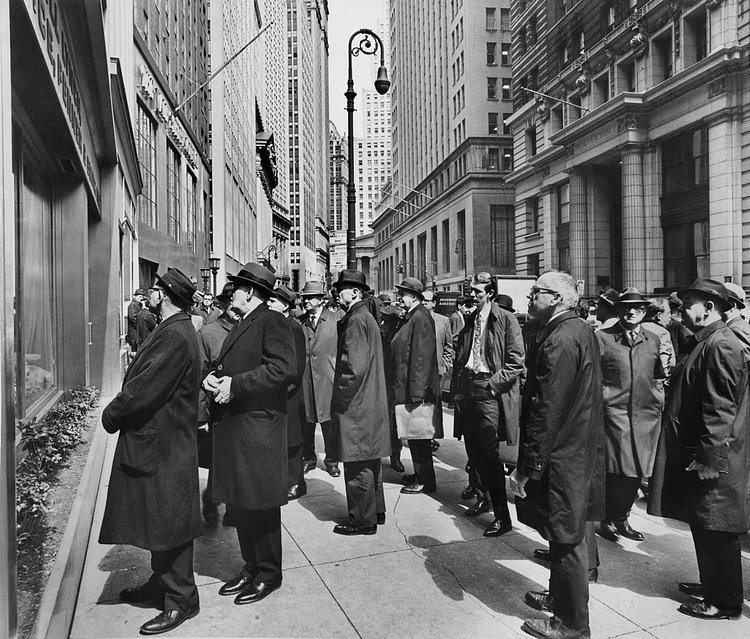
April 1, 1968: Stock-watchers observed the numbers on Broad Street, which showed signs of good news “as securities markets around the world generally placed a bullish tag on President Johnson’s bid for peace in Vietnam,” reported The Times. “Brokers said that markets hungering for good news in recent months seized upon the speech Sunday night by President Johnson,” which called for a halt to bombing in Vietnam and invited its government to “join him in a ‘series of mutual moves toward peace.’ ” The war lasted until 1975.
Photo: Lively Morgue
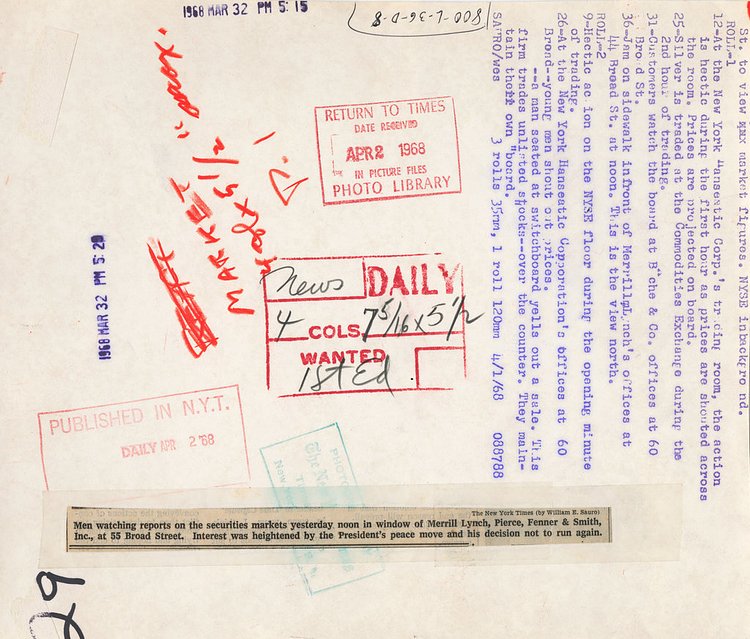
(photo back)
(photo back)
Photo: Lively Morgue

The Lively Morgue is a daily photo blog from the New York Times in which an original photo from the newspaper's archives is reposted along with tidbits of information gleaned from the historical article it accompanied. Along with a rescan of the original photograph, the backs of each photo are also scanned, giving a behind-the-scenes look at the editorial process of one of the world's best newspapers.

Today's posting features a shot from April 1st, 1968 showing a crowd of people in the Financial District watching the stocks after a call for peace in Vietnam.

April 1, 1968: Stock-watchers observed the numbers on Broad Street, which showed signs of good news “as securities markets around the world generally placed a bullish tag on President Johnson’s bid for peace in Vietnam,” reported The Times. “Brokers said that markets hungering for good news in recent months seized upon the speech Sunday night by President Johnson,” which called for a halt to bombing in Vietnam and invited its government to “join him in a ‘series of mutual moves toward peace.’ ” The war lasted until 1975.

The original article from 1968 has more.
Fake MTA Subway Poster Urges Donald Trump Not to Engage in Unwanted Sexual Conduct on Subway

You know that guy manspreads too.

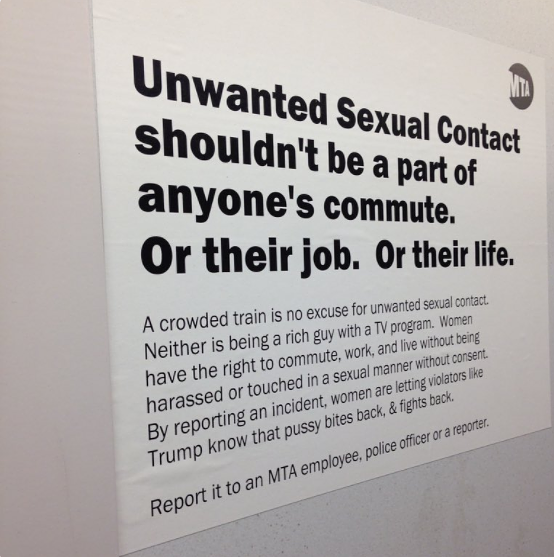
First spotted by Emilio Herce for Brokelyn, this fake MTA subway etiquette signs is a message to Trump to keep his hands to himself on the train, and everywhere else too.

Unwanted Sexual Contact shouldn’t be a part of anyone’s commute. Or their job. Or their life.

A crowded train is no excuse for unwanted sexual contact Neither is being a rich guy with a TV program. Women have the right to commute, work, and live without being harassed or touched in a sexual manner without consent. By Rreporting an incident, women are letting violators like Trump know that pussy bites back, and fights back.

Report it to an MTA employee, police officer or a reporter.

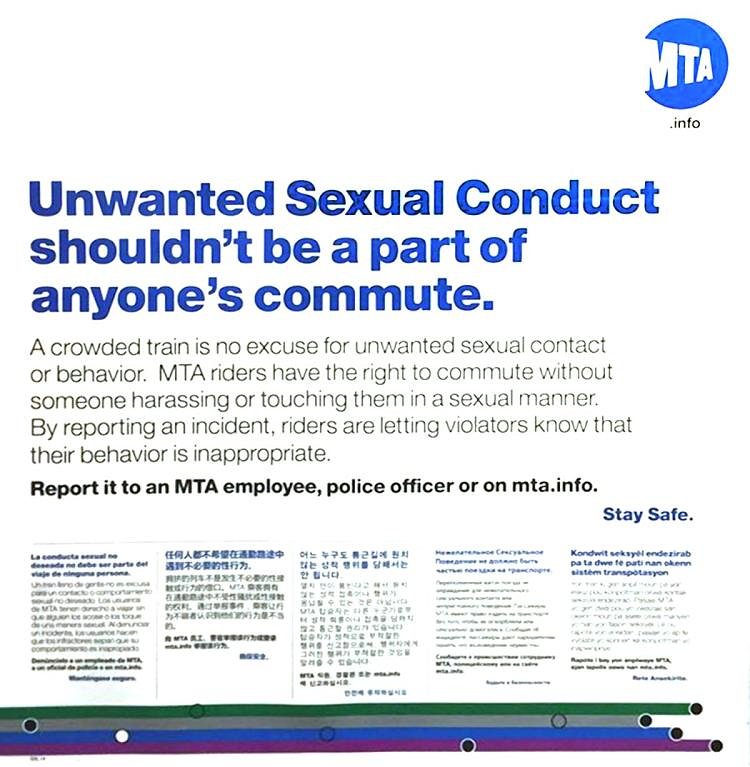
Here is the original MTA poster for comparison:

Photo: MTA

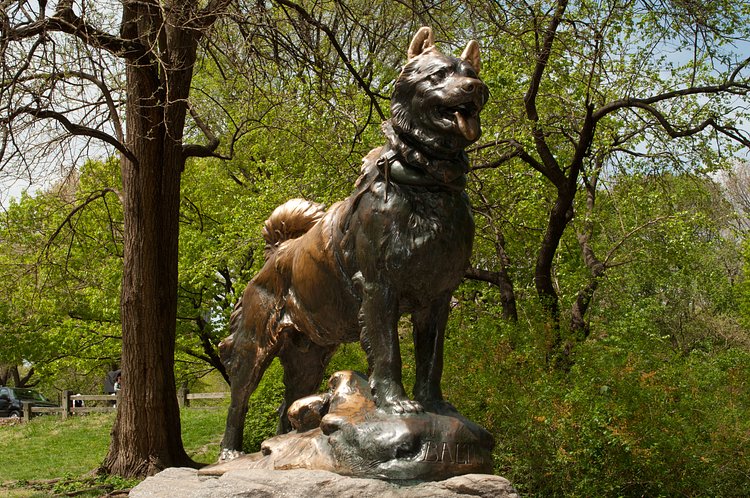
The Story Behind Balto, Central Park's Famous Siberian Husky Dog Statue

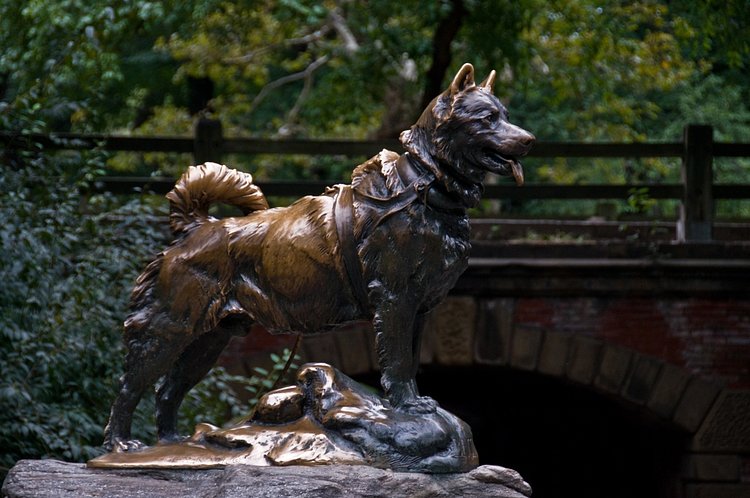
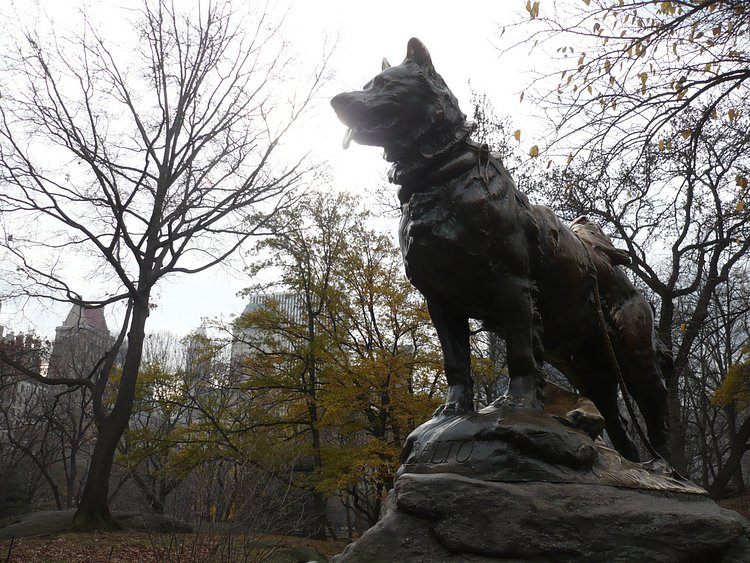
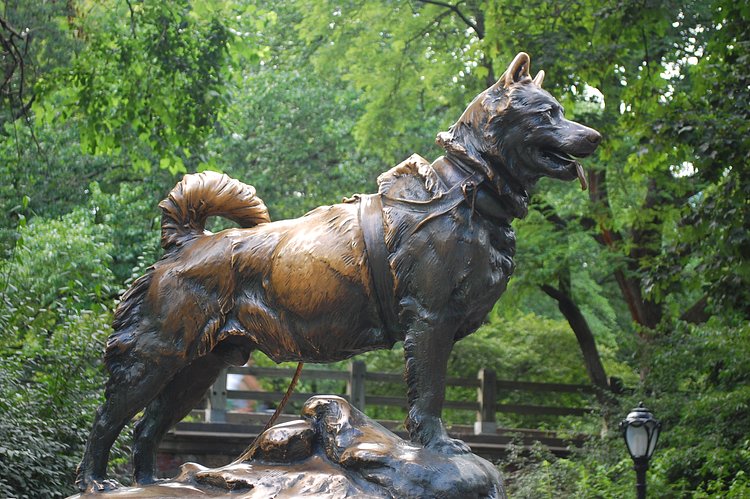
Our friends at Forgotten NY recently shared the story behind Central Park's famous dog statue, a tribute to a Siberian Husky named "Balto".

Balto was a Siberian Husky who led a dogsled team carrying desperately needed diphtheria antitoxin through a blizzard to Nome, Alaska, in January 1925. A plaque below Balto’s statue is a relief of the seven sled dogs on their grueling 600-mile journey. Sculptor Frederick G. R. Roth made animals his specialty; two more of his works, Dancing Goat and Honey Bear, both from 1927, are in the Central Park Zoo. The present Iditarod sled dog race (and ultimately, the Idiotarod hipster shopping cart race held every January) was inspired by Balto and the sled dogs’ journey.

Check out the full article for more.