[VIDEO] Trendy vs. Traditional: NYC Cheesecake Edition

Trendy vs. Traditional is an entertaining video series from New York Magazine's Grub Street in which food critic Adam Platt and his teenage daughter Penelope try two versions of the same food: one meant for purists, and one meant for the 'gram. In this recent episode of the series, watch as they explore the New York Cheesecake at Keki Modern Cakes and Eileen’s Special Cheesecake.

When judging a cheesecake, New York restaurant critic Adam Platt would argue the dessert doesn’t qualify if it’s not New York style. His daughter Penelope, however, is drawn to creative variations on the classic. In this episode of “Trendy vs. Traditional,” the duo sets out to compare two versions: the Instagram-famous jiggly cheesecakes at Keki Modern Cakes and the time-honored traditional slices at Eileen’s Special Cheesecake.
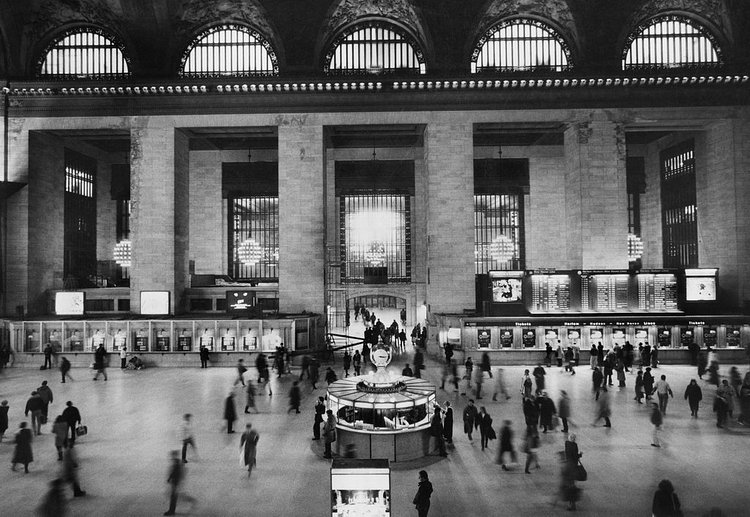
Vintage Photograph Shows Grand Central Terminal's Main Concourse Circa 1988

In the late 1970s, Grand Central Terminal’s owners faced bankruptcy and, figuring they had a solution, nearly slapped a 55-story office tower on top of the revered architectural marvel. The terminal was saved by the Supreme Court’s decision in Penn Central Transportation Co. v. New York City, “in which the Supreme Court upheld for the first time the principle on which landmark preservation laws are based,” wrote Paul Goldberger in The Times in 1990. William Brennan figures as the hero in Mr. Goldberger’s tale, having written the majority opinion that prevented the terminal’s owners, Penn Central, from developing on the landmark and thereby securing its status as a structure of public good. Justice Brennan believed, like many others, that historic buildings and other structures “enhance the quality of life for all.”
Photo: Keith Meyers
(photo back)
(photo back)
Photo: Keith Meyers

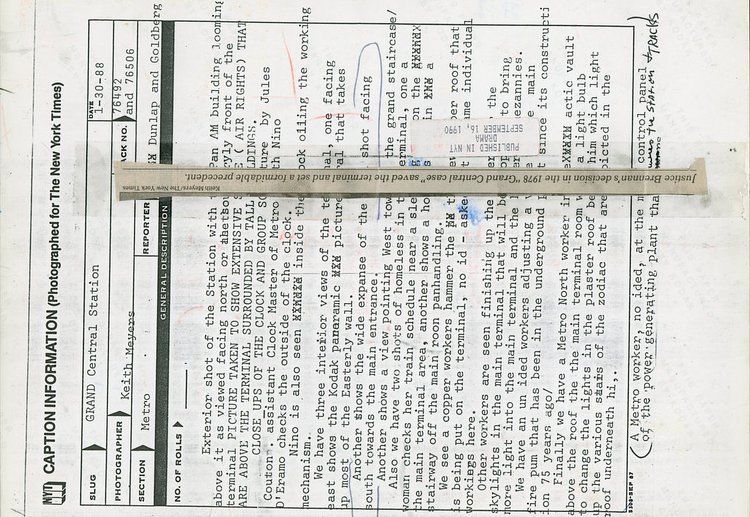
The Lively Morgue was a daily photo blog from the New York Times in which an original photo from the newspaper's archives were reposted along with tidbits of information gleaned from the historical article it accompanied. Along with a rescan of the original photograph, the backs of each photo were also scanned, giving a behind-the-scenes look at the editorial process of one of the world's best newspapers.

This post shows a vintage photograph of the Main Concourse in Grand Central Terminal from 1988.

In the late 1970s, Grand Central Terminal’s owners faced bankruptcy and, figuring they had a solution, nearly slapped a 55-story office tower on top of the revered architectural marvel. The terminal was saved by the Supreme Court’s decision in Penn Central Transportation Co. v. New York City, “in which the Supreme Court upheld for the first time the principle on which landmark preservation laws are based,” wrote Paul Goldberger in The Times in 1990. William Brennan figures as the hero in Mr. Goldberger’s tale, having written the majority opinion that prevented the terminal’s owners, Penn Central, from developing on the landmark and thereby securing its status as a structure of public good. Justice Brennan believed, like many others, that historic buildings and other structures “enhance the quality of life for all.”